Pick a task you already do several times a month. A shift planner might read requests from a shared inbox and copy approved changes into a schedule. That repeated work offers a place to practice documenting exceptions. Using an unfamiliar tool on the live schedule might take more time and approval, so start with an invented version or a copy you’re allowed to use.
Name the part of the task you want to improve. “Document why an exception was escalated” is narrow enough to try twice a week. A skill profile from O*NET can help you find adjacent tasks and ways to describe them. Use your employer’s process to decide where practice is appropriate. O*NET OnLine
Define the trial
Suppose the usual handoff gives the new shift a name and a calendar change but leaves out whether the manager approved it. Draft an example record with four fields. These could include request date, proposed change, decision, and who has the next action. Ask a colleague whether they could identify the next step from that sample.
Then make a second example with a different kind of exception. Close the first template and see which fields you remember to include. The IES practice guide describes retrieval practice and spacing as ways to strengthen learning in the settings it reviews. You can try the principle by repeating the small task across several weeks. Institute of Education Sciences
Find one decision that repeats inside the work you already do
Make a list of tasks you handle at least a few times a month and identify the part where you want to get more consistent. A shift planner might see recurring requests to change an appointment after a schedule is set. The planner can practice documenting which colleague approved the change and what the next person needs to check. A repeated task lets you compare two examples with the same purpose while one condition changes. Make it short enough to fit into an existing day and agree which materials you can use.
Choose an improvement with an observable answer. If you try to get better at “collaboration,” you might not know where to begin. If you want to learn to prepare a handoff another person can act on, ask them to find the current schedule, named owner, and next decision time from a sample. O*NET profiles describe occupational tasks and skills that can help you find and name a useful activity. Check your workplace rules before practicing on a live case or sharing a sample. O*NET OnLine
Discuss conditions with your manager where the trial affects other staff or live work. You could practice on invented requests in a private draft first, then ask a colleague to review the results. If the team already has a shared template, use it to learn how the expected fields serve the task. Editing the current workflow may need more permission, especially when a new field changes how decisions are recorded. Write what you intend to learn and which work remains within the team’s normal process.
Use a pair of examples that need different choices
Suppose the first sample shows a schedule change already approved and the second has an approval pending. In the first, the receiving shift should know the new time and who recorded the approval. In the second, it should know what information is still needed and when the approval owner will look. Write one handoff for each without copying the answer from the guide. Observe where the two records change. Ask a reviewer whether they can see the difference before they act.
Use the same check on both samples. A colleague could identify the current state and the next step from each version. If they name a person who is off duty, adjust how you state the next working time. If they read a proposed appointment as confirmed, add the real status where the reader can see it. Write one question about the decision you want to keep practicing. After a few days, try a third example with an unfamiliar assignment. The US Institute of Education Sciences discusses recall and spacing as tools for learning. The exercise helps you see which conditions you can still apply after a delay. Institute of Education Sciences
Decide whether to try it in an approved work setting
If the two sample handoffs work, ask whether you can test a small part on a real but routine case. Follow whatever review and privacy instructions apply. One teammate can read the revised note and tell you whether it supplies the information they need. Record their observation and when the task occurred. If the trial does not support a wider claim, save it as evidence of preparing the specific handoff. You can keep a private account of the work without copying internal details into a portfolio.
Check how the change affected the reader before sharing it more widely. A shorter handoff could leave out a condition that the receiving shift needs for an exception. Restore that information and try again on a sample. If the guide already covers the situation, see whether an earlier link helps more than creating another template. Give the manager or team owner a clear description of what you practiced and which part still needs work. Choose a second task only after you can show the result for the first one.
Check what transferred
Use the same observation each time. For the handoff, see whether a second reader can answer what happened, who agreed to it, and what is due next. Ask the reader to point to the words that answer each question. If a date is missing, add it to the next example and practice again.
Keep practice work separate where the real data or systems require permission. A made-up schedule can demonstrate the reasoning and you can still ask a manager when to try the revised process. If the manager agrees, define which handoff will use it and when you will review the outcome.
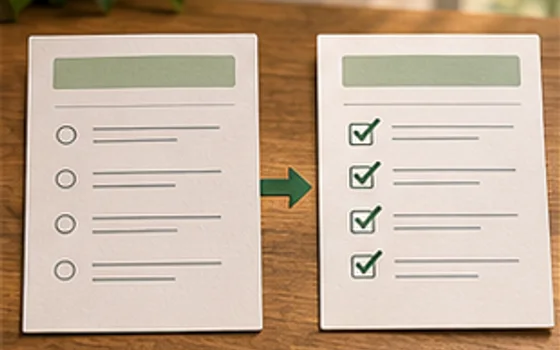
Save one before-and-after sample that you’re allowed to keep. Write down which part of your work changed and the observation you used to judge it. That makes it easier to explain the skill in a later conversation.
If your employer permits sharing the result, show the change with a before-and-after work sample.